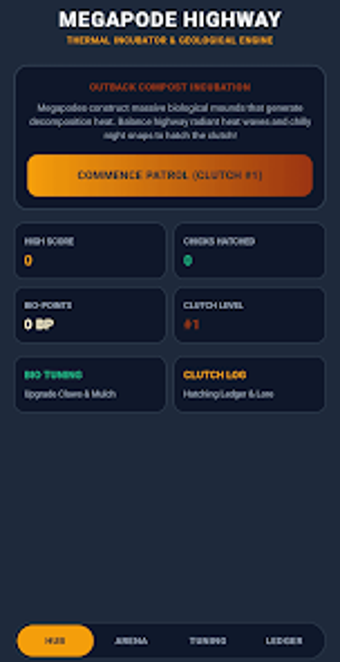
Thermodynamic puzzle sim that manages incubation under highway hazards
Manage an outback incubation mound by balancing heat, mulch, and ventilation in real time, keeping clutch temperatures between 33°C and 35°C. Megapode Highway, from TESHYMA on Android, blends biological simulation and arcade puzzles into short play sessions. The game uses gesture-based controls for adding insulation and creating chimneys, presents dynamic hazards from passing road trains, and supports local offline play, making it a fit for nature-minded casual players and puzzle fans.
Plays like a focused natural-science puzzle with measurable temperature goals
The game centers on a narrow, daily task: maintain the incubation mound within a strict 33°C to 35°C band. That requirement turns routine interactions into precise adjustments: swipe up to add insulating leaf mulch and swipe down to clear ventilation chimneys. Thermal radiation from highway traffic and chilly nights create read-and-react moments where a single gesture can push the meter into or out of the safe range.
Handles environmental interaction and device needs with simple compatibility
The Android release runs locally and offers offline play, which suits short sessions away from Wi-Fi. Procedurally generated visuals and fluid real-time physics run on-device to produce responsive behavior between vehicle passages and mound temperature. Installation uses the Google Play Store, and the developer’s catalog suggests similar nature-themed titles that follow the same mobile delivery model.
User interaction emphasizes touch responses and quick learning
Gesture-based controls replace menus: direct swipes modify mulch or chimneys, and the game's fluid physics make those gestures feel consequential. Onboarding is compact because the core mechanics map to single gestures, and visuals convey immediate thermal effects. Accessibility details such as high-contrast modes or screen-reader hints are not listed in the source material, so their presence cannot be confirmed.
Blends arcade pacing with an educational biological angle
The design ties to real-world behavior of Australian scrub-fowl by framing incubation as an environmental balancing act; that biological premise underpins both puzzle rules and level hazards. Dynamic road trains introduce sudden thermal bursts and soot, which forces players to react rather than plan long chains of actions. The reception described the simulation as engaging and responsive, supporting its daily-play appeal to nature fans and casual gamers.
To sum up, best for players who want measured, reactive puzzle sessions
The game serves players who enjoy short, tactile challenges that test timing and temperature control; it rewards quick corrective gestures and attention to changing conditions. A practical tip: watch vehicle patterns to anticipate thermal bursts rather than waiting for the temperature bar to cross thresholds. For those seeking a calm, science-rooted arcade experience, it fits well; those wanting long-form management or confirmed accessibility features should consider that limitation.